


Booking for : Ravenna- Classic Tour – Full Day
Ravenna- Classic Tour – Full Day


Tour Details
Discover Ravenna, known all over the world as the capital of mosaic!
This charming town on the Adriatic coast preserves an exceptional artistic heritage, thanks to its past that has seen it as the protagonist of crucial and important historical events. Between the V and the VIII century, Ravenna was the capital of the Western Roman Empire, of the Ostrogoth’s Kingdom and of the Byzantine Empire: the traces of this past are in the wonderful ancient buildings and in its eight UNESCO Monuments.
Ravenna is also the city of Dante Alighieri, the major Italian poet and the father of the Italian language: he chose this place as his “last refuge” and the city still guard his immortal remains.
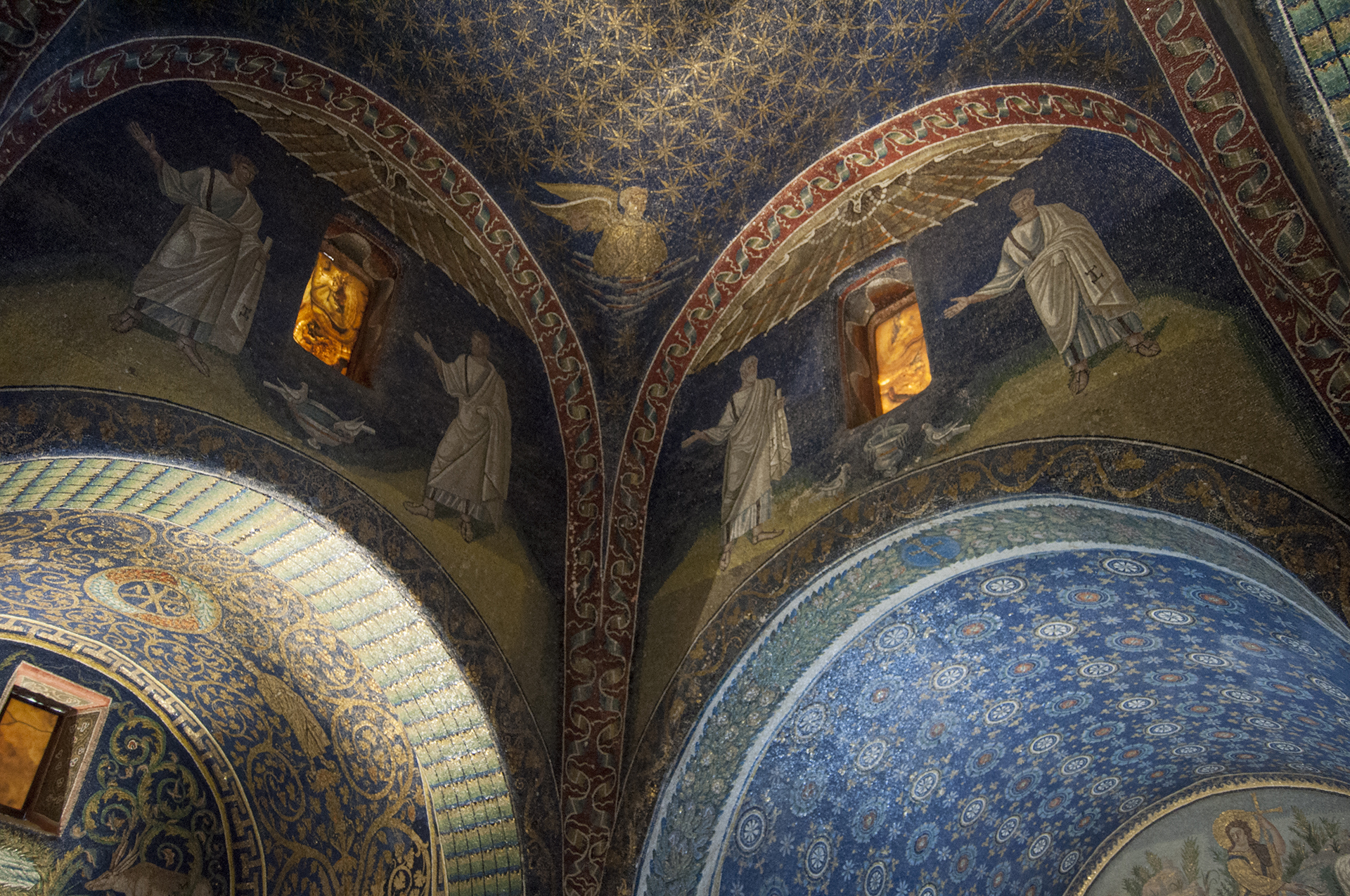
Our journey into history starts from the Roman Age (V century), with the visit of the Neonian Baptistery, the most ancient baptistery in town, still active and decorated with wonderful mosaics representing the Baptism of Christ and the procession of the apostles, and of the Mausoleum of Galla Placidia. The Roman empress, a very religious woman, built this place to contain the remains of her and her family, and the beautiful mosaic in here represent stories of the Bible and Saints, but also fine decorations that remind the eastern art and the nature; on top the famous starry sky enchant for its light and its golden shines.
We explore the places related to Theodoric, the Ostrogoth’s King (V-VI centuries), starting with the Basilica of Sant’Apollinare Nuovo, a Palatine church decorated with mosaics that show stories of Jesus and the important places of ancient Ravenna as the port of Classis and the Palace of Theodoric. Together with the mosaic of Theodoric’s time, we have here also the bright procession of martyrs and virgins, a Byzantine addition that proves the troubled past of this church. We visit then the Arian Baptistery, built by the great king for the Arian community, and we leave for a moment the mosaics to admire the white stone of Istria in the Mausoleum of Theodoric, a massive monument surrounded by the green of a pleasant public park (only exterior visit of the mausoleum).
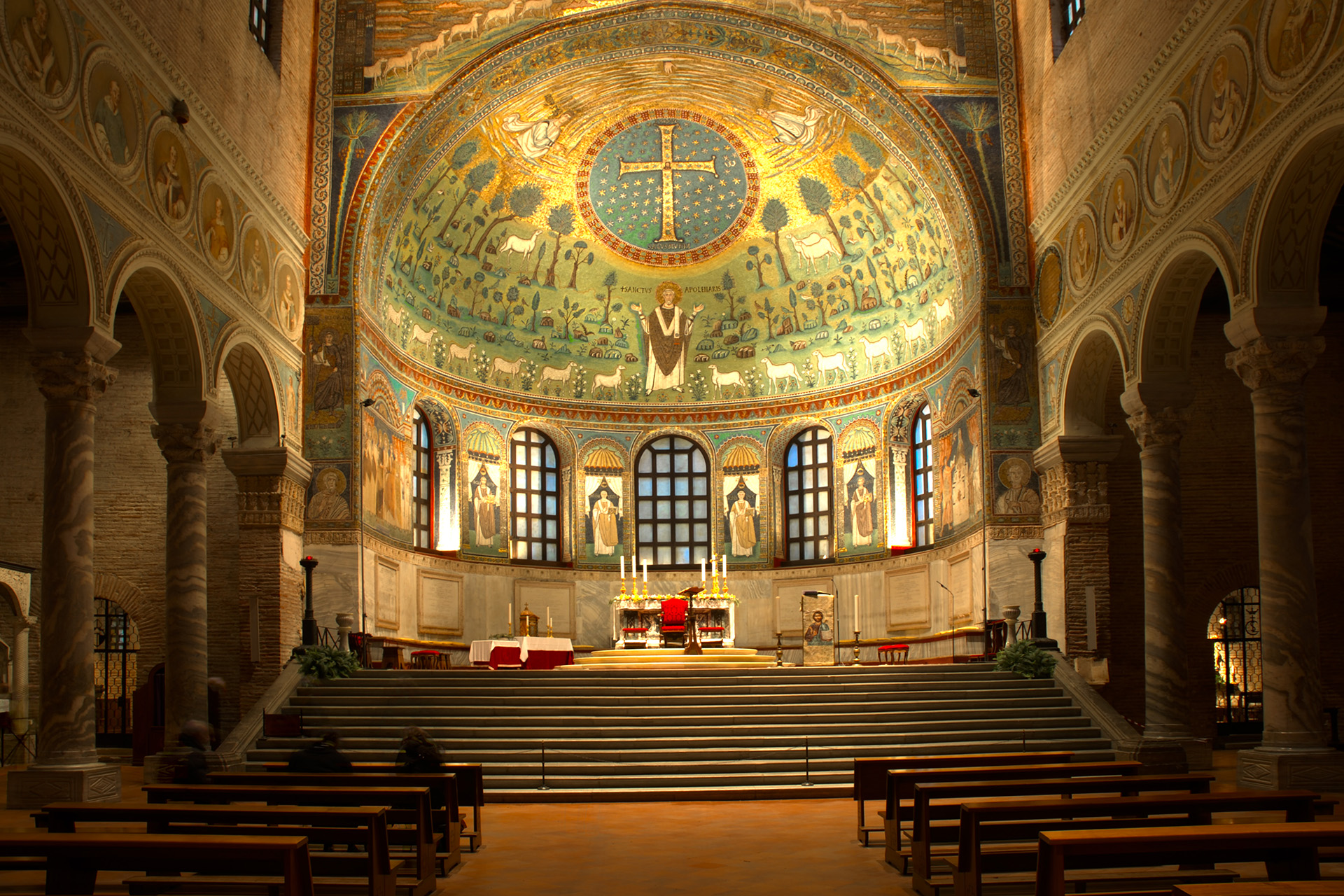
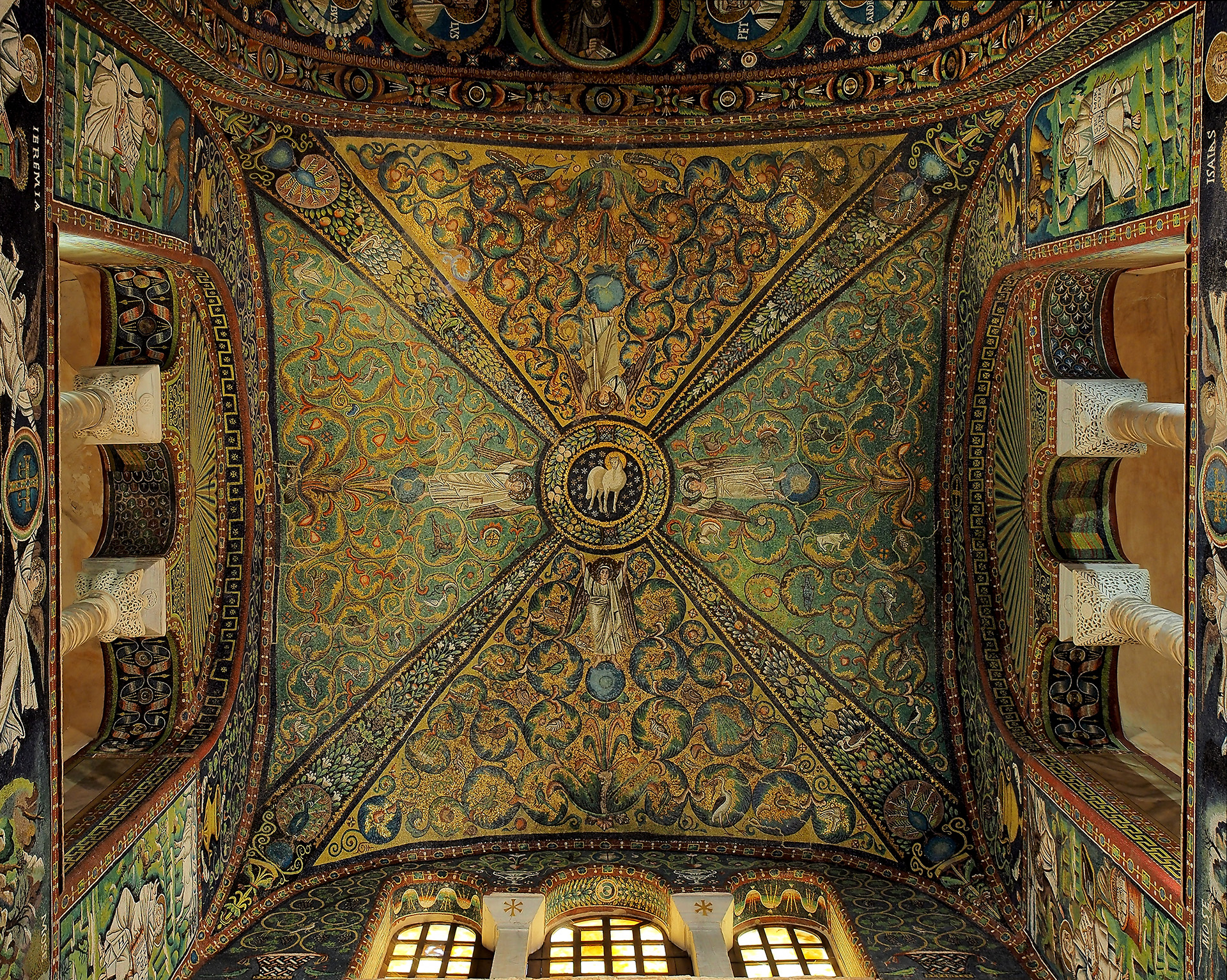
We admire the magnificence of the Byzantine time (VI century), with the grandiose Basilica of San Vitale, with its particular octagonal shape and famous for the variety of its marble and the fine mosaics representing the emperor Justinian and his wife Theodora. We move to the Basilica of Sant’Apollinare in Classe, the only surviving church of the ancient port city: in the apse richly decorated with an idyllic garden, stands out a bright golden cross and the figure of the Saint to whom the church is dedicated.
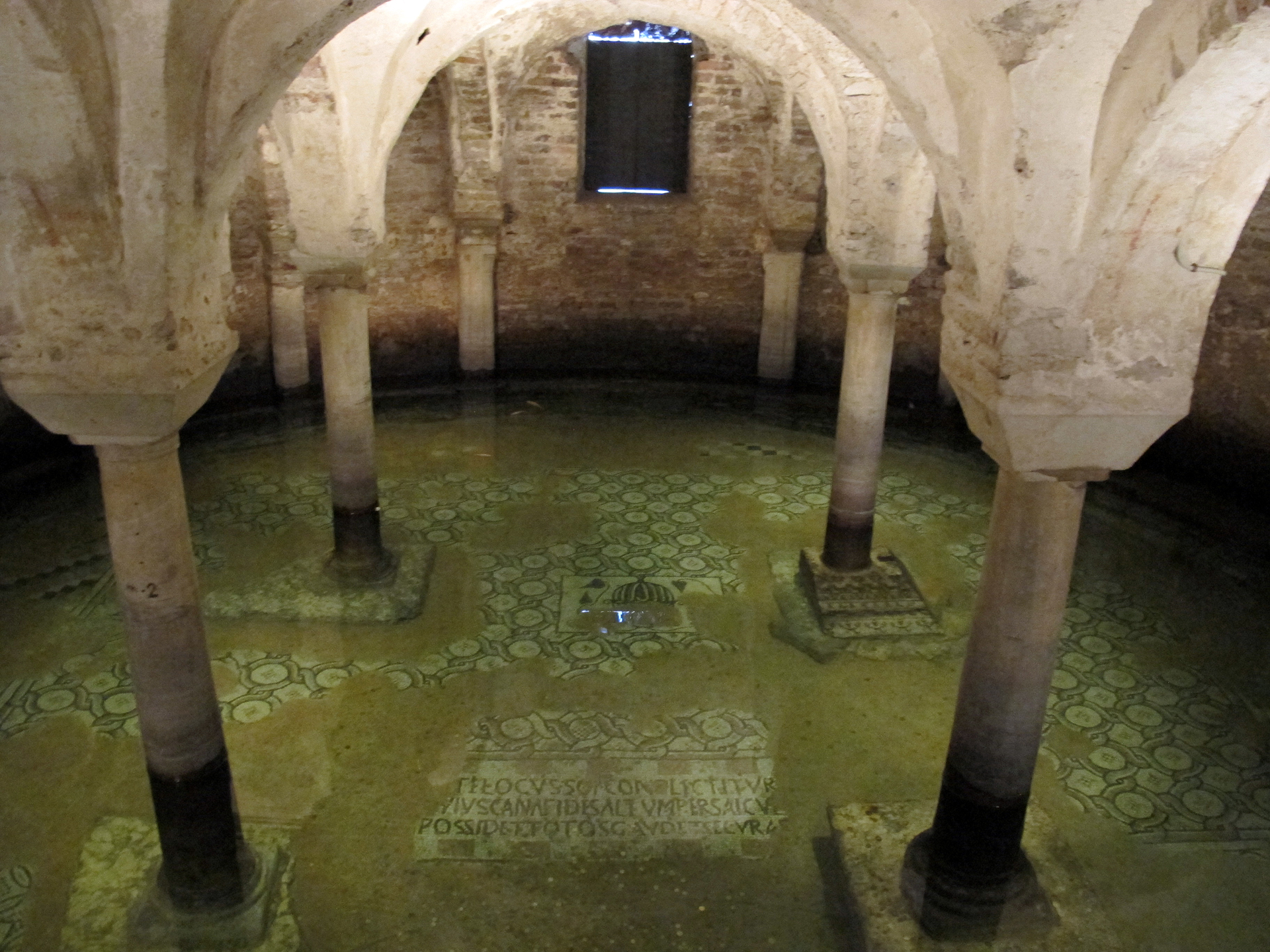
We pay homage to the major Italian poet visiting Dante’s area, with the evocative flooded crypt of the Basilica of Saint Francis and the neoclassical Tomb of Dante Alighieri: we discover the adventurous story of its remains, stolen from the Franciscan Friars to keep them in Ravenna, and the love of Ravenna people for the poet throughout the centuries.
We enjoy a cup of coffee or an ice cream in Piazza del Popolo, the beautiful Town Hall square with its elegant Venetian characteristics, and we make a short visit to one of the many mosaic workshops.
The visiting order of the monuments is not the one listed above and is adjusted according to the needs of visitors. We do not assume responsibility for ticket increases or changes of monuments opening hours that may occur during the year.
For some questions you find a faster answer here than writing us:
Where can I park?
If you are by car you can park in Largo Giustiniano (3.00 euros all day, near the Basilica of San Vitale), or in Piazzale Aldo Moro (free, behind the train station). In the city center there are also several parking lots with parking meters, but usually in here the parking is limited to a maximum of 3 hours. Depending on your needs it may be better to choose one of the two parking areas: we will tell you which one is the most convenient when you book.
If you are by bus the 2 drop off/ drop on points are Piazzale Aldo Moro, behind the train station, and Piazza Resistenza, a 10/15 minute walk from the Basilica of San Vitale. Also in this case we will tell you which one to choose according to your needs.
If in the group there are people with real physical and mobility impairments please let us know.
Where do I meet the guide?
If you are already in the city center, the guide can meet you in your hotel, in the ticket offices of the monuments or in Piazza del Popolo. If you arrive directly for the guided tour then the guide can pick you up in the car parks or at the drop off/ drop on points.
Can mobility impaired people enter everywhere?
Yes, the monuments of this itinerary are also accessible for mobility impaired people (remind that the visit of the Mausoleum of Theodoric will only be external).
There will be entry fees for the monuments or any other fee?
Yes, the costs are as follows:
– € 2,00 for the Arian Baptistry – free for people under 18 years old
– € 5,00 for the Basilica of Sant’Apollinare in Classe (reduced fees applicable) – free for people under 18 years old
– € 9,50 (free under 10 years old) for a combined ticket that includes the Basilica of San Vitale, the Basilica of Sant’Apollinare Nuovo and the Archbishop Museum (the museum is not included in this tour but you can visit it in another moment). To visit the Neonian Baptistry and the Mausoleum of Galla Placidia there is for everyone (free under 6 years old) an additional ticket of € 2,00.
If you are a group up to 15 people is mandatory to use earphones inside the monuments. You can rent them for all the duration of the tour. The price is € 3,00 per person and you can write here to book them: emiliaromagna@toursound.it.
Is it necessary to book the entrance at the monuments?
We strongly suggest, even for a few people, to book the cumulative ticket for the Basilica of San Vitale. If you are a group for the reservation you must write to info@ravennamosaici.it. For a few people you can book here: https://www.ravennamosaici.it/biglietteria-online/.
Reservations can not be made to us as it is also required to prepay the ticket: we can however suggest the best booking time depending on your needs.
Is it possible to pay the other tickets in advance or with credit card?
At the Basilica of Sant’Apollinare in Classe it is possible to pay the entrance in advance (writing to apollinare.ra@ravennantica.org) and it is possible to pay on spot in cash or by credit card, while at the Battistero degli Ariani the payment is made only on spot with credit card or coins (no banknotes).
Where are the tourist information offices?
There is one in Piazza San Francesco.
Are there public toilets?
Yes, in Piazzale Aldo Moro, in Piazza Resistenza and close to the Basilica of Sant’Apollinare in Classe there are pay toilets (0.50 euros).
Recommend Tour Packages
IL PAPAVERO Soc. Coop. - Guide Turistiche
Via Cavour 114 - 48121 Ravenna
Sede Legale : Via Faentina 106 - 48123 Ravenna
C.F. / P. I.V.A. 00871530390
